Mini Soccer: Football Cup 2026
- 3.00
- 4,8
- Installaties
- 10.00M
- Prijs
- Free

Screenshots





Analyse door Reviewed
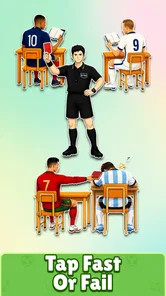
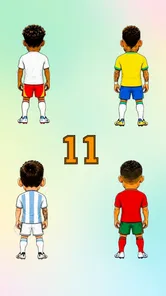
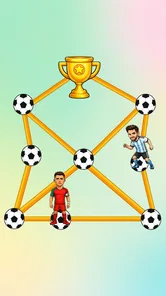
Mini Soccer: Football Cup 2026 is a casual football game built around quick matches and the simple pleasure of putting the ball in the net. I’d consider it when I want a light game to pick up between other tasks, rather than a detailed football simulation. The appeal is easy to understand: short-form soccer action, a cup to pursue, and challenges that give each session a little extra purpose. My main reservation is that this kind of compact premise depends heavily on how satisfying the controls and match flow feel over time.
A useful way to decide whether it belongs on your phone is to think about the football games you already enjoy. If you like making a quick attempt, learning through play, and having one clear target, this has a sensible place alongside other casual games. If what you want is a detailed recreation of managing a club or controlling every aspect of a match, I would look elsewhere. Its value is in keeping the idea of football compact, not in trying to replace a full sports game.
Mini Soccer: Football Cup 2026 is free to play and developed by TSACom. Its average rating is 4.8 from around 20 thousand ratings, and it has passed 10 million installs. Those figures suggest that it has reached a sizeable audience, but they cannot tell me whether its particular style will suit you. The game is rated PEGI 12, and version 0.1.3 is listed for Android 7.1 and later. It was released on 29 June 2026.
Quick matches, with a cup as the goal
The game’s football focus makes it easy to approach without a long introduction: aim to score, get through matches, and work toward winning the cup. That straightforward loop is a good fit for someone who wants an arcade-like break rather than line-ups, tactics, or a season-management layer. I would choose it when I have a few spare minutes and want an activity that feels more involved than simply watching a clip, but less demanding than a full sports simulation.
One practical way to get more from a short session is to give yourself a small target before starting: complete a match, practise getting shots on target, or make progress toward the cup. A clear stopping point helps keep a casual game from turning into aimless tapping. The cup objective also gives a useful reason to return, although the real draw will depend on whether each match remains enjoyable after the novelty of scoring wears off.
There is a small but useful distinction between playing to win and playing to improve. If a match goes badly, I’d focus on one controllable thing on the next attempt, such as taking more care before a shot rather than rushing toward the goal. That gives each repeat a purpose without pretending the game has a deep training system. It also helps me tell whether I am enjoying the football itself or merely chasing the next cup step.
The description also points to viral challenges. That gives the game a second angle beyond ordinary match play: a challenge can make a brief session feel like a specific task instead of another run through the same routine. I’d treat these as a bonus rather than assume they offer a deep or changing challenge system. The exact format and frequency are not established here, so I wouldn’t choose the game solely on the expectation of regular new content.
Meer van onze redactie

 Microsoft Authenticator
 houdt dagelijkse aanmeldingen eenvoudig, maar laat je bij herstel te vaak zoeken
Een rustige, doelgerichte beveiligingsapp die dagelijkse aanmeldingen eenvoudig maakt, maar bij herstel en accountbeheer niet altijd genoeg houvast geeft.
 PLAYit-All in One Video Player
PLAYit groeit doordat video’s op je telefoon blijven tellen
Terwijl videodiensten om kijktijd vechten, wint PLAYit terrein met iets eenvoudigers: bestanden afspelen die al op je toestel staan, zonder eerst een abonnement te kiezen.

 slither.io
 maakt van elke bocht een risico en elke ronde een verleiding
Een slangetje, een veld vol lichtgevende bolletjes en een gevaarlijk simpele belofte: nog één ronde. slither.io maakt van elke misstap een reden om opnieuw te beginnen.

 Miljonair 2026: offline trivia
Miljonair 2026 getest: hoe betrouwbaar is de quiz na een fout?
Een offline quiz moet niet alleen vragen afvuren, maar ook overeind blijven bij haast, onderbrekingen en twijfel. Juist daar wordt duidelijk wat deze Miljonair-game waard is.
 AccuWeather weerbericht
AccuWeather maakt plannen met buien en gevoelstemperatuur makkelijker
Een weerapp moet meer doen dan temperatuur tonen. AccuWeather maakt vooral indruk wanneer buien, gevoelstemperatuur en timing je plannen echt veranderen.

 The Weather Channel
 maakt van de regenradar een vertrekbesluit
De uurverwachting en neerslagradar zijn op hun best geen weerpraat, maar een praktisch hulpmiddel om te beslissen wanneer je vertrekt, fietst of juist wacht.
Laatste nieuws



Where it fits into an ordinary day
Imagine waiting for a friend who is a few minutes late. A compact football game can suit that gap because the goal is immediately clear, and you can focus on one match rather than plan a long session. I’d still avoid starting if I had to put the phone down at any second: even a casual game can be awkward when an interruption arrives mid-match. It makes more sense for a short, uninterrupted pause than for moments when I need to stay fully attentive to something else.
For a commute, the same distinction matters. If I have a seat and a little time, a quick attempt at the cup can be an appealing distraction. If I’m walking, changing platforms, or keeping an eye on a stop, I’d leave it alone. Football games ask for attention at the very moments a casual player may be tempted to multitask. That is a real usability trade-off, not a flaw unique to this title.
It can also work as a shared conversation starter without needing to turn into a formal multiplayer session. I might show a friend a goal or compare how we approach a scoring attempt, then hand the phone back. That kind of informal use is different from assuming there is a built-in way to compete together. If direct play with friends is the main reason you are looking for a football game, check the current version’s options first rather than relying on the social feel of the sport.
Progress without turning it into a chore
A cup gives progression a visible destination, which is useful when I want more than isolated scoring attempts. It also creates a little pressure: losing or failing to advance can make a supposedly relaxed game feel like a task to repeat. I’d recommend setting my own pace instead of treating every result as a reason to keep playing until I win. If progress feels satisfying, continue; if it starts to feel like work, put the game down and return later.
A practical boundary is to decide before opening the game whether I am playing one match or following the cup for a while. It sounds simple, but a clear limit can prevent a quick break from stretching longer than planned, especially when a result leaves me wanting an immediate retry. I would treat a lost match as a natural point to stop if I am short on time, rather than starting another one just to feel that the session ended on a win.
That approach is especially helpful for younger players, since the PEGI 12 rating is a useful signal for families considering the game. I would look at the rating alongside a child’s maturity and the household’s expectations, rather than treating an age label as a complete guide. A parent can also agree on a simple play-time boundary before handing over a device, particularly if cup progress makes it tempting to start one more match.
The version number is 0.1.3, so I would be cautious about judging the game as though its current form guarantees a particular long-term progression experience. A version label alone does not tell me how often it changes or what future updates will contain. For a player deciding whether to try it, the sensible approach is to judge the matches available now, not to rely on imagined future modes or improvements.
Fairness and spending: what I would check
The game is free, which makes trying it an easy decision in financial terms at the point of download. But free does not automatically mean that every part of play is free of spending prompts, nor does it establish that purchases affect competition. I would not claim that Mini Soccer is pay-to-win or fully free from purchase pressure without reliable purchase details. That distinction matters: fairness depends on what a game sells and how those items interact with play, not simply on its download price.
Before settling in, I’d check the purchase information shown on the device and, if a child will play, make sure purchase controls are set the way the family wants. That is a practical precaution rather than a claim that this game pushes spending. If I encounter a prompt, I’d ask whether it is optional, whether it changes match outcomes, and whether I can continue enjoying the cup without it. Those answers are more useful than assuming that a free download has no commercial friction.
For a fair personal test, I would separate the first impression from any decision to spend. Play the available matches at the pace you normally would, and notice whether the basic football loop is enjoyable on its own. If the game presents a purchase choice, take a moment to understand what it offers before deciding. That is especially worthwhile for younger players: keeping device-level purchase controls in place gives families a straightforward safeguard without assuming the game itself behaves in a particular way.
Competitive fairness is similarly worth approaching carefully. The presence of football matches does not by itself confirm online head-to-head play, rankings, matchmaking, or a competitive rewards system. If your main reason for downloading is to test skill against other people, verify that the current version actually offers the kind of competition you want before investing time in it. For casual solo play, that uncertainty matters less: the appeal can still be the simple act of playing and pursuing a cup.
How it compares with other football games
Compared with a full football simulation, this is the kind of game I’d expect to approach for immediacy, not depth. A simulation is the better choice if you want detailed team control, realistic match planning, or a sustained career structure. Mini Soccer’s compact casual framing makes more sense when you want a direct scoring objective without turning a spare moment into a project. The trade-off is that players looking for layers of tactics may find the central loop too narrow.
Against other casual sports games, its football focus and cup goal give it a clearer sporting destination than a purely score-chasing activity. The challenge angle may also appeal to players who like a defined task. On the other hand, if you prefer a game with a broad range of sports, puzzle variety, or a more elaborate progression system, a different casual title may hold your attention longer. I’d choose this one because I specifically want a quick football-flavoured session, not because I expect it to cover every kind of mobile play.
There is also a useful distinction between a game that is easy to start and one that stays compelling. A clear goal lowers the barrier to entry, but long-term interest depends on the feel of repeated matches and the value of progressing through the cup. I’d give it a short trial with that question in mind: do I want another match because the play is enjoyable, or only because I feel obliged to finish the next step? That is a more reliable personal test than popularity figures alone.
Compared with a puzzle game or an endless runner, the main difference is the theme and the kind of attention each asks for. Here, the appeal is tied to scoring and moving through football matches, so it is a better fit when I want a sporting objective than when I want a varied set of small puzzles. A runner may be easier to play in very brief bursts, while a simulation offers more decisions for a longer session. This sits between those extremes: focused, simple in premise, and most compelling when I am in the mood for football specifically.
What I’d want to know before recommending it
Would I recommend it to someone who only has a few minutes at a time? Yes, if they enjoy simple football play and can give a match their attention. The cup goal offers a reason to return, while the casual format is easier to approach than a simulation. I would not recommend it as a background activity while walking or doing something that needs concentration, since football play is best enjoyed when the player can focus on the match.
Is it suitable for a child? The PEGI 12 rating is the clearest starting point, but parents should still consider the individual child and check the device’s purchase settings. Is it competitive with other players? That should be confirmed in the version being considered; I would not assume online competition from the football theme alone. These checks help match expectations to the game rather than filling gaps with guesses.
Will it stay interesting for someone who wants a deep sports game? Probably not the first choice. Its casual positioning and direct cup pursuit are better suited to short, uncomplicated play than to someone seeking detailed management or a long-form football career. Likewise, players who are wary of any uncertainty around optional spending should review purchase details before continuing beyond the initial download. Those are sensible boundaries, not reasons to dismiss the game outright.
What should I do if I am unsure whether it suits me? Treat the first session as a small trial, not a commitment. Notice whether the controls and pace feel comfortable, whether the cup gives you a satisfying reason to continue, and whether you enjoy the challenges when they appear. If the answer is no, there is little reason to force it: a more tactical football title or a casual game with a different central activity may fit better. If the basic match loop clicks, the simple structure is precisely what makes it easy to return to.
My verdict: a low-commitment football pick
I see Mini Soccer: Football Cup 2026 as a straightforward option for players who want a quick football diversion with a cup to chase and challenges to try. Its free entry and large audience make it easy to consider, while the concise premise is its strongest practical advantage. The honest caveat is that a simple loop can only carry a game so far for someone who needs extensive tactics, variety, or verified competitive depth.
I’d suggest trying it if scoring goals in short sessions sounds appealing, then deciding for yourself whether the match-to-match play earns another visit. I would skip it in favour of a fuller football simulation if tactical control is the main attraction, or choose a different casual game if I wanted more varied activities. My trust verdict is positive but measured: the game’s appeal is clear, and the best recommendation is to approach it as a casual football game rather than assume anything about purchases, competition, or future content that has not been established.
Mini Soccer: Football Cup 2026 Veelgestelde vragen
Wat voor soort spel is Mini Soccer: Football Cup 2026?
Mini Soccer: Football Cup 2026 is een voetbalgame met korte, toegankelijke wedstrijden en een speelse presentatie. Je bestuurt je team op het veld, probeert kansen te creëren en speelt om wedstrijden en toernooien te winnen. De compacte opzet maakt het geschikt voor een snelle pot tussendoor, al kunnen de precieze spelmodi en functies verschillen per versie en platform.
Kan ik Mini Soccer: Football Cup 2026 offline spelen?
Of je zonder internetverbinding kunt spelen, hangt af van de functies in de versie die je downloadt. Een wedstrijdmodus tegen de computer werkt bij sommige voetbalgames offline, terwijl onderdelen zoals online wedstrijden, ranglijsten of het ophalen van beloningen doorgaans internet vereisen. Controleer daarom de storepagina en test de beschikbare modi voordat je erop rekent dat de game onderweg zonder verbinding werkt.
Is Mini Soccer: Football Cup 2026 gratis te downloaden?
De game kan gratis te downloaden zijn, maar dat betekent niet altijd dat alle inhoud kosteloos beschikbaar is. Mobiele voetbalgames kunnen advertenties, optionele aankopen of andere extra’s bevatten. Bekijk vóór installatie de prijsinformatie en het onderdeel over aankopen in de App Store of Google Play. Zo weet je beter welke kosten mogelijk zijn en kun je aankoopbeperkingen instellen als kinderen het spel gebruiken.
Is Mini Soccer: Football Cup 2026 geschikt voor kinderen?
De kleurrijke, eenvoudige stijl kan aantrekkelijk zijn voor jongere spelers, maar geschiktheid hangt ook af van advertenties, online functies en in-app aankopen. Lees de leeftijdsclassificatie en controleer de privacy- en storegegevens voor je de game installeert. Als een kind speelt, is het verstandig aankopen met een wachtwoord of ouderlijk toezicht te beveiligen en online functies samen te bekijken.
Op welke apparaten kan ik Mini Soccer: Football Cup 2026 installeren?
De beschikbaarheid kan verschillen tussen Android en iOS, en ook per land, apparaat en besturingssysteemversie. Controleer de officiële Google Play- of App Store-pagina om te zien of jouw telefoon of tablet wordt ondersteund en hoeveel opslagruimte nodig is. Let daarnaast op eventuele minimale systeemvereisten; een ouder apparaat kan de game mogelijk niet soepel uitvoeren, zelfs als installatie beschikbaar is.
Voordelen
- Wedstrijden zijn kort en daardoor geschikt voor een snelle speelsessie.
- De eenvoudige besturing is toegankelijk voor spelers zonder voetbalervaring.
- De kleurrijke presentatie maakt het spel direct herkenbaar.
- De voetbaltoernooien geven wedstrijden een duidelijk doel.
- Je kunt het spel doorgaans ook zonder teamgenoten spelen.
Nadelen
- De gameplay kan na verloop van tijd repetitief aanvoelen.
- De kunstmatige tegenstanders bieden mogelijk weinig uitdaging voor ervaren spelers.
- Advertenties kunnen het tempo van het spelen onderbreken.
- Voortgang kan afhankelijk zijn van in-app-aankopen of lang spelen.
- Online functies kunnen minder goed werken bij een instabiele verbinding.